Print technology
We group machines by their mechanical style, including FDM filament printers for functional parts and LCD or SLA resin printers for high-detail work.
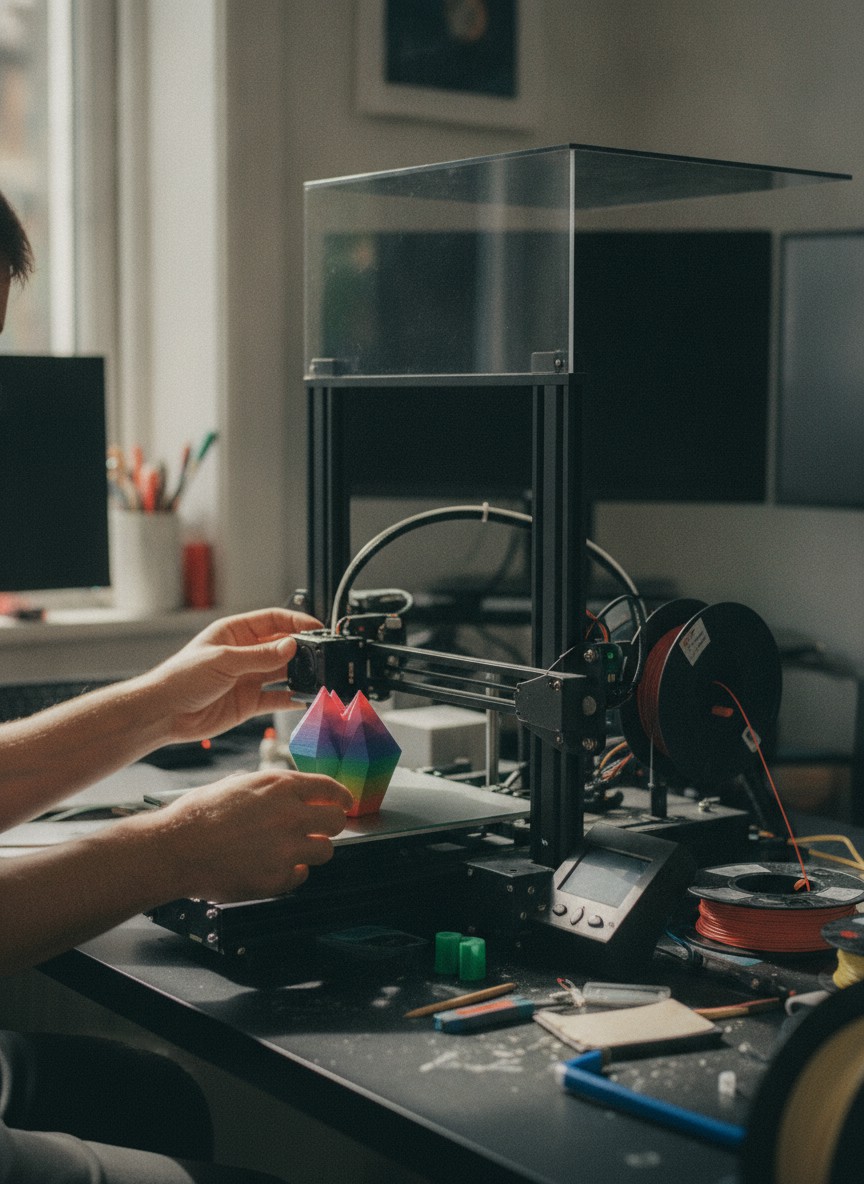
Finding a machine depends on what you plan to make and where you plan to keep it. This guide explains the different categories found in our listings.
We track to keep this set of data current and useful for builders and hobbyists.
We group machines by their mechanical style, including FDM filament printers for functional parts and LCD or SLA resin printers for high-detail work.
This catalog identifies machines capable of 500mm/s performance and those with large build volumes for oversized industrial prototypes.
We separate DIY kits that are fun to assemble from pre-assembled machines that are ready to print out of the box.
Every 3D printer here gets a score from the same handful of signals, so you can compare them without guessing.
When a listing has a public average rating, that number does most of the work.
Notes we actually saved still count a little, more reviews nudge the score up, and very few drag it down.
Listings that are often out of stock lose a little, and a brand score is just those listing scores combined, not a separate number.
FDM machines use PLA, PETG, or ABS filaments and are popular for home and school use because the materials are easy to handle. Resin printers, including LCD and DLP types, use liquid tanks to achieve much higher precision for professional or artistic models.
High-speed printers and CoreXY systems are built for rapid production, often reaching speeds of 500mm/s. These are ideal for users who need to iterate on designs quickly without waiting all day for a single part.
Mini 3D printers fit well on small desks, while enclosed 3D printers help manage the environment around the print. For those working in shared spaces, silent 3D printers use specific motor drivers to reduce noise during operation.
Pick a set that matches how you will use it
Machines capable of 500mm/s or faster for rapid part production
Liquid photopolymer machines for high-detail miniatures and jewelry
Spools of thermoplastic materials for use in FDM machines
Systems that can print with several different filaments in one model
Hardware optimized for the most common bio-plastic printing material
Machines with sensors that automatically calibrate the print surface
The lower-priced listings in this catalog
Easy-to-use machines with simple setups and automated features
Liquid materials designed for capturing fine textures and resolution
Neutral grey hardware and photopolymer resins for model making
Gray listings from the title and features
Standard machines sized to fit on a typical workbench or desk